
Reconcile
Research, Product strategy, UX/UI Design, Prototyping
Every dollar accounted for.
- When
- November 2026
- For
- Self-initiated fintech project
- Reconcile helps marketplace finance teams identify and explain differences between expected and actual seller payouts.
- Product scope
- A read-only connection to the processor and ledger, a breakdown that explains each payout to the cent, confidence labels, shared cases and automation rules.
- Use case
- A finance manager sees a seller payout come in $51.62 short and needs to know which part is delayed, which part is lost, and how sure the app is.
The problem
A seller received $51.62 less than expected.
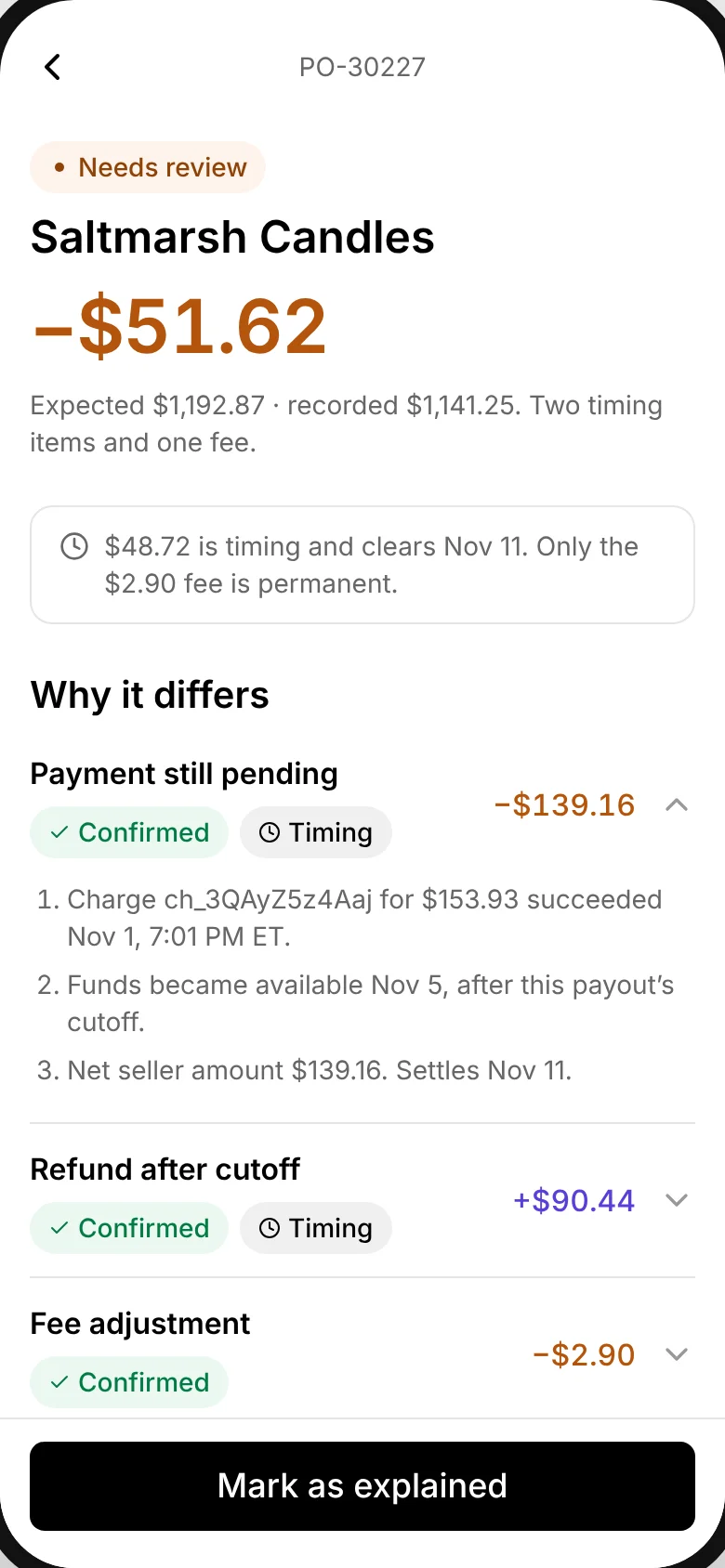
Saltmarsh expected $1,192.87 but received $1,141.25. Finance teams manually review transactions and spreadsheets to explain differences like this every payout cycle.
−$51.62

01 · Explaining payout differences
Existing tools show the numbers, not the reasons.
Design decision
I designed a reconciliation breakdown that connects the expected payout to the recorded amount. Each row identifies a cause, and the total accounts for the difference.
02 · Organizing by seller
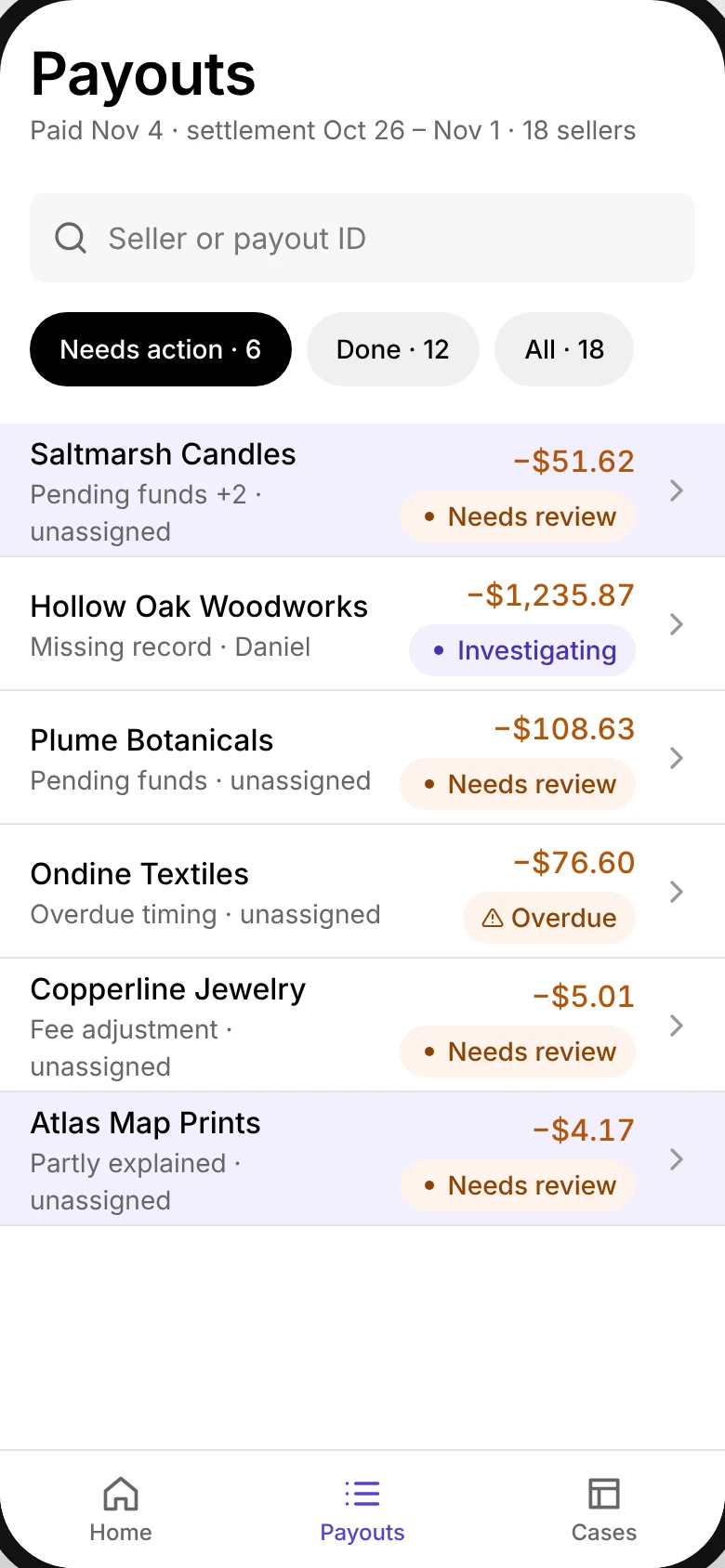
Existing tools organize transactions, not sellers.
Design decision
I organized the interface around individual seller payouts, so finance teams can review transactions, investigate differences, and manage cases in one place.
03 · Making timing visible
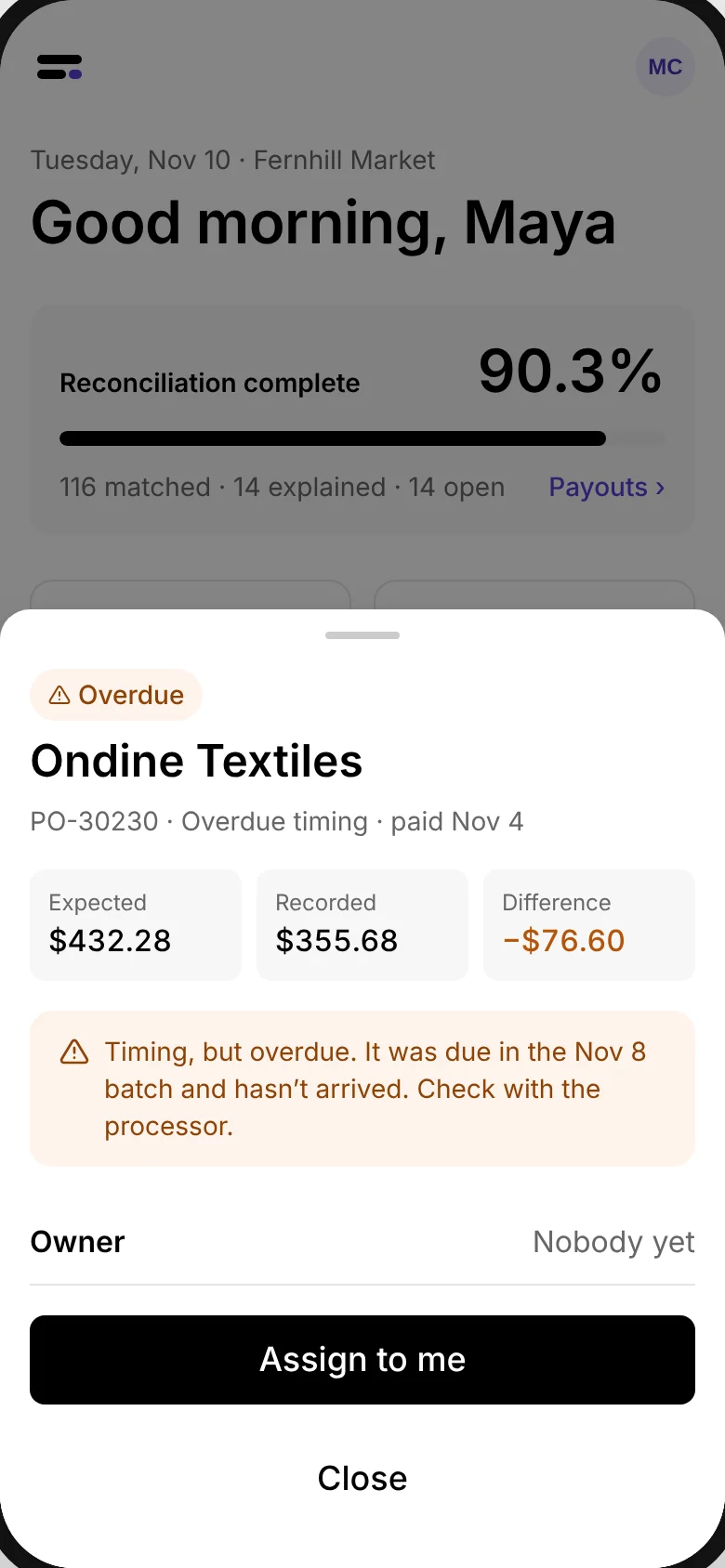
Delayed payments look like missing money.
Design decision
I separated temporary delays from actual losses using status indicators and expected settlement dates. Overdue payments move into “Needs you” for review.
04 · Communicating confidence
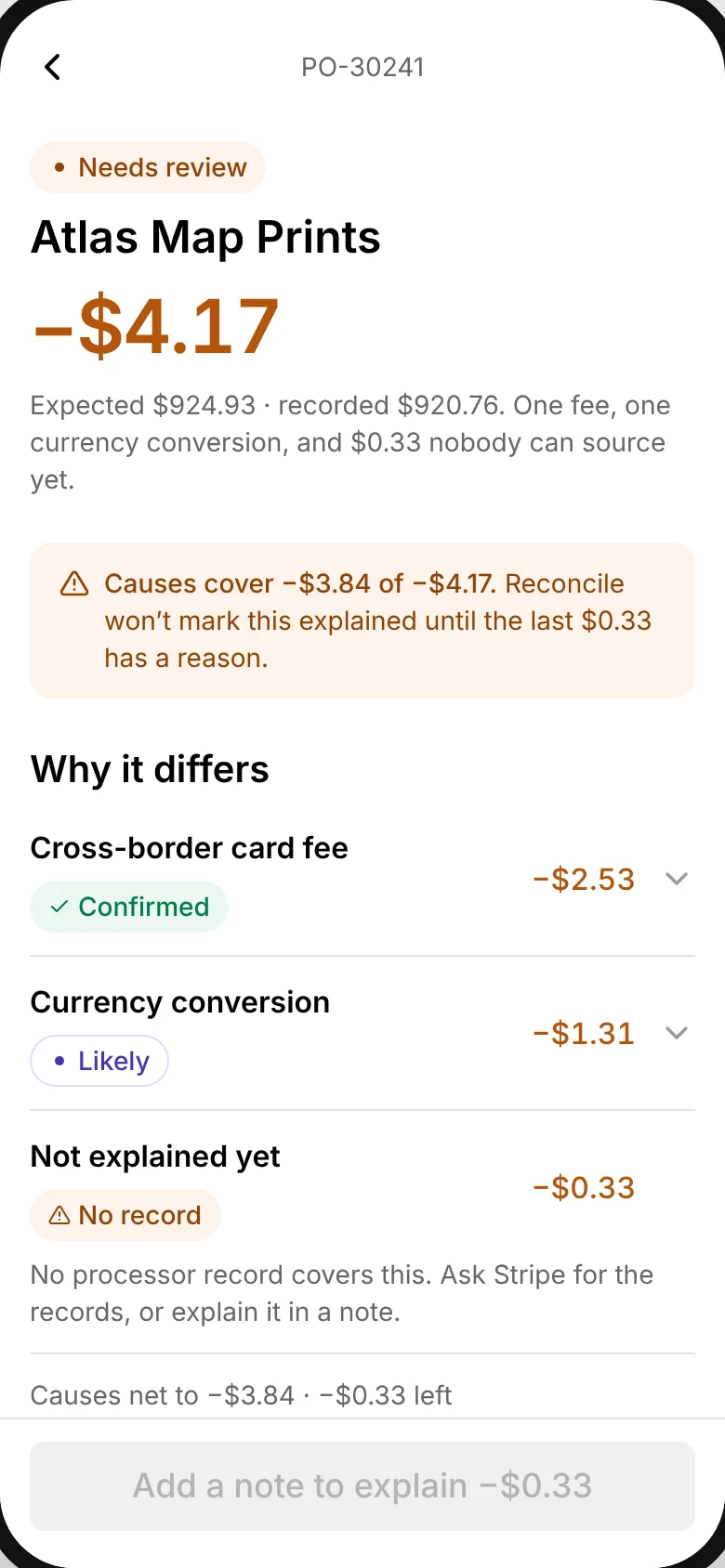
Not every discrepancy has a confirmed explanation.
Design decision
I introduced three confidence levels: Confirmed, Likely, and Hypothesis. Confirmed causes can resolve automatically, while unsupported explanations require manual review.
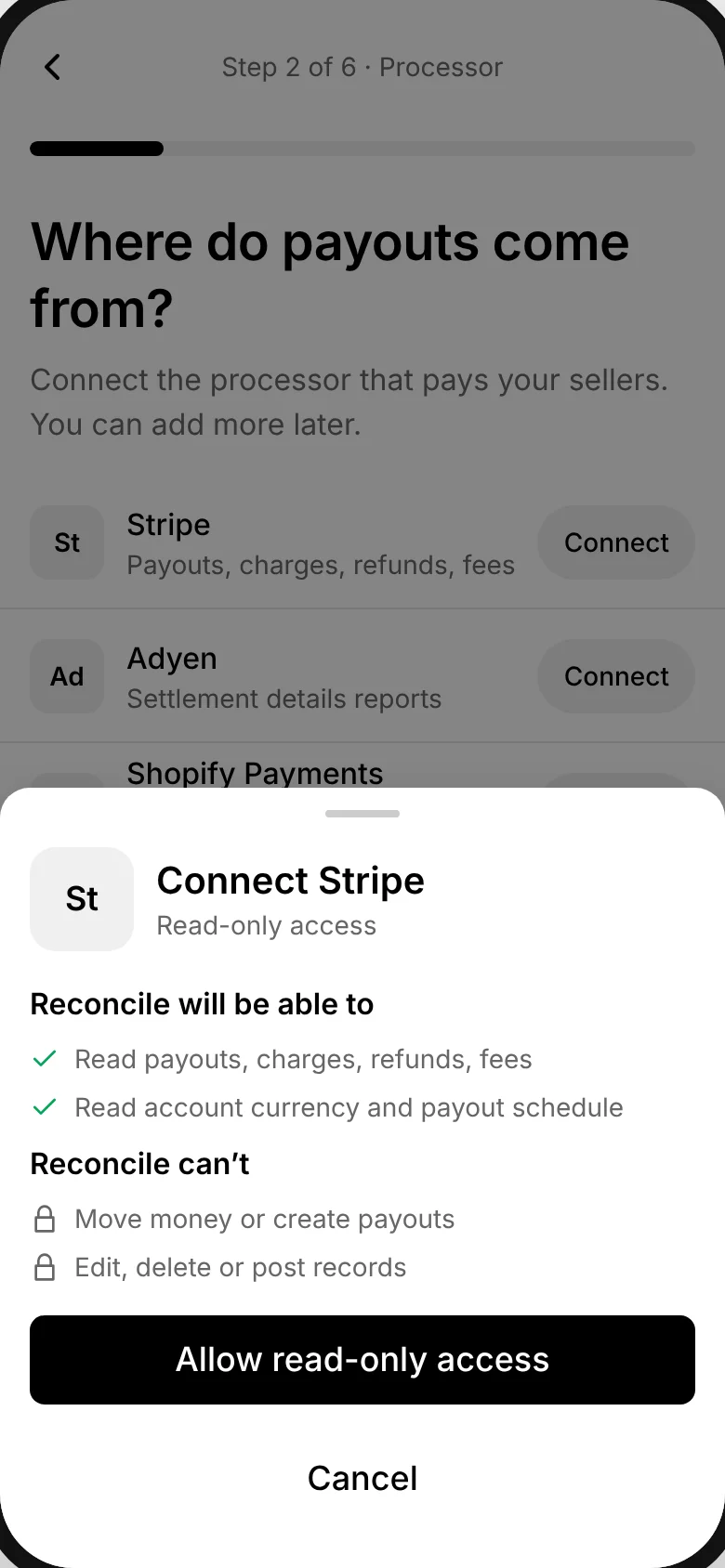
05 · Building trust
Connecting financial accounts raises concerns about data access.
Design decision
I made read-only permissions explicit during onboarding and removed editing controls. Closing a case records the decision without changing financial data.
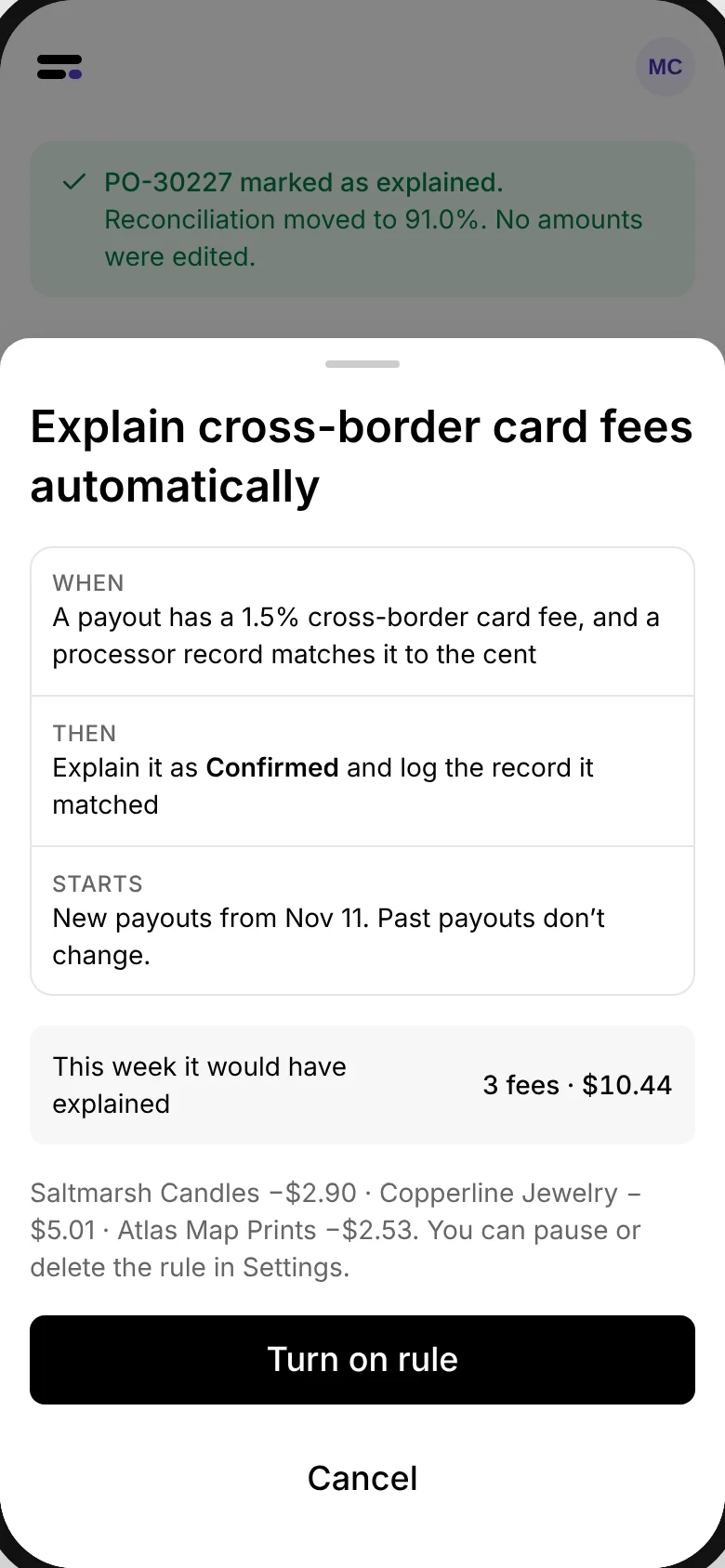
06 · Automating recurring issues
Finance teams investigate the same fees repeatedly.
Design decision
Reconcile identifies recurring discrepancies and suggests automation rules after three occurrences. Users preview each rule before applying it to future payouts.
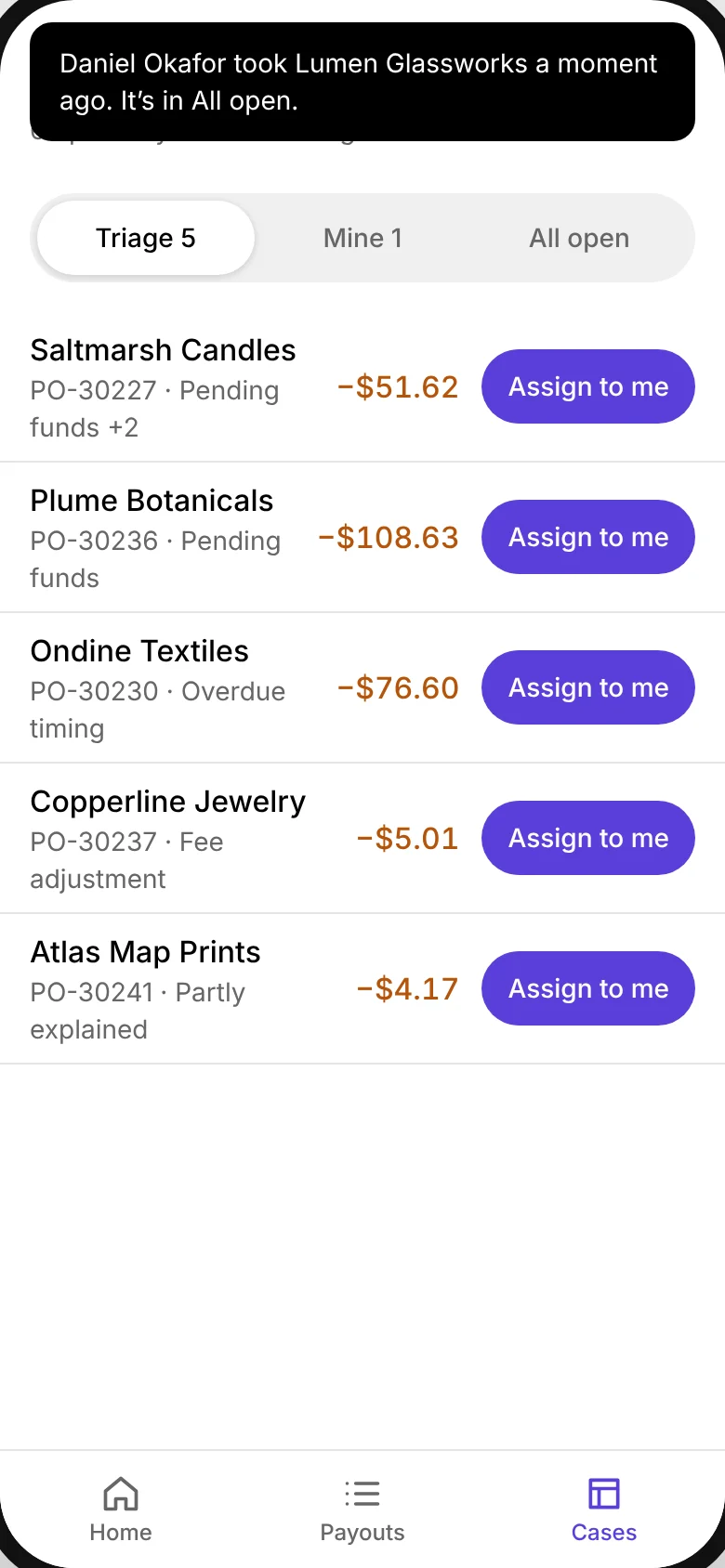
Edge case · Concurrent editing
Two finance managers open the same case.
The first action takes priority. The second manager sees who updated the case, preventing conflicting decisions.
The problem
Competitive landscape
Existing tools focus on matching transactions.
I reviewed publicly available product documentation to identify opportunities for clearer, seller-level explanations.
Edge cases
I mapped 45 edge cases to test the system.
Three directly influenced the design, including how Reconcile handles unexplained differences.
When causes don't account for the full gap, Reconcile displays the remaining amount as “Unexplained” and prevents the case from closing.
Money & data
Timing
Evidence
Cases & teamwork
Connecting
Screens & access
Money & data
Causes don't add up to the difference
→ An “unexplained $X” row, and no closing until it's explained
Numbers always add up. When they don't, show it.
Interactive prototype
Test the reconciliation workflow.
Connect accounts, investigate a delayed payment, explain a payout difference, create an automation rule, and close a case.
All prototype data is synthetic and reconciles to the cent.
- About 4 minutes. All data is synthetic but adds up to the cent.
Continue
View all projects