The Problem
1. Overflowing Amount of Textile Waste
Ghana receives millions of unwanted clothes every week. Half of these items are unsellable and non-biodegradable. They often end up in informal dumpsites or are burned.
2. Environmental and Health Risks
The influx of textile waste (e.g. synthetic fibers) contributes to plastic pollution and air contamination. This leads to harmful substances being released that significantly affect local communities’ health and living conditions.
3. Global Injustice
Greenpeace blames the Global North for worsening Ghana’s textile waste problem and calls to action for a global treaty to work on sustainable local textile industries.
Hypothesis
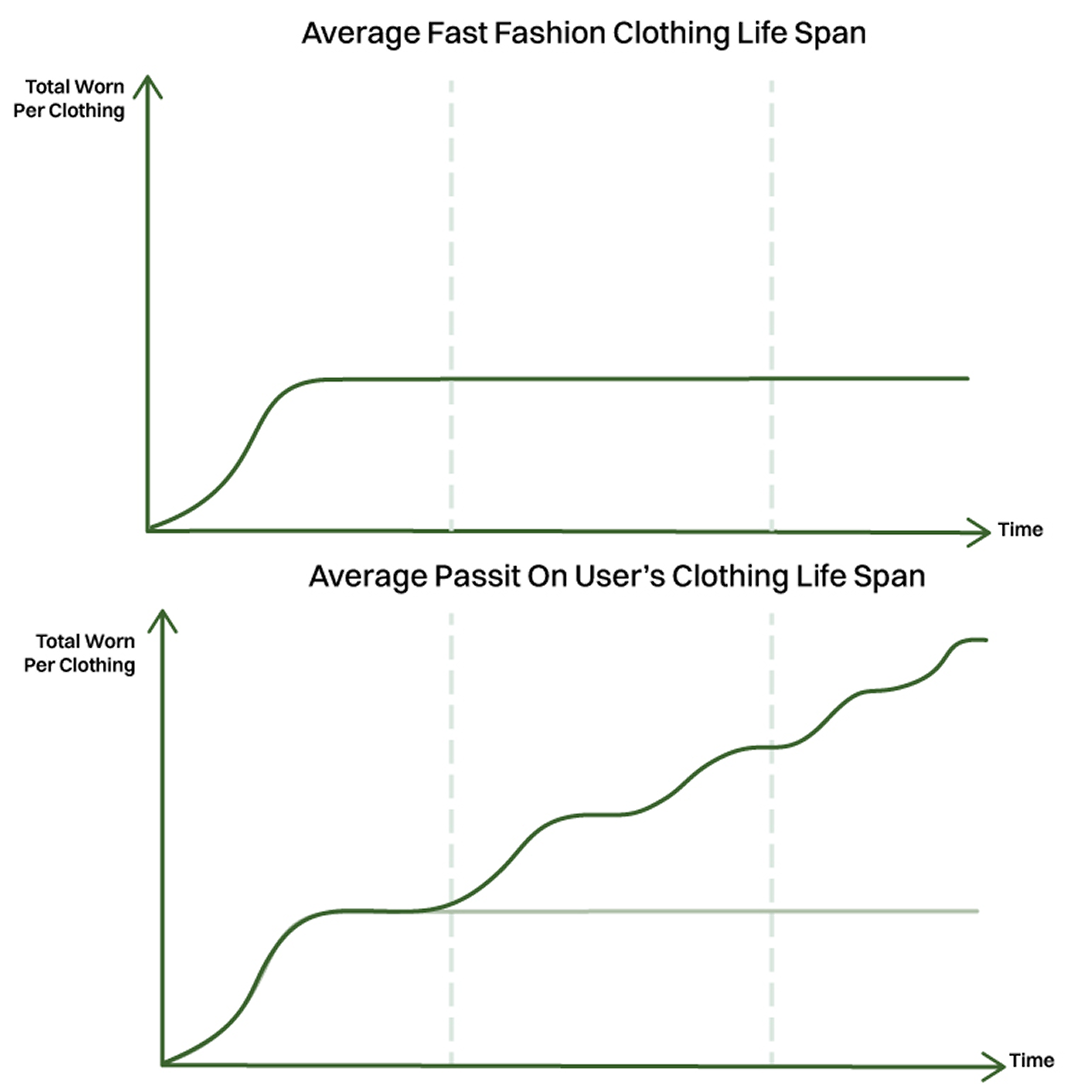
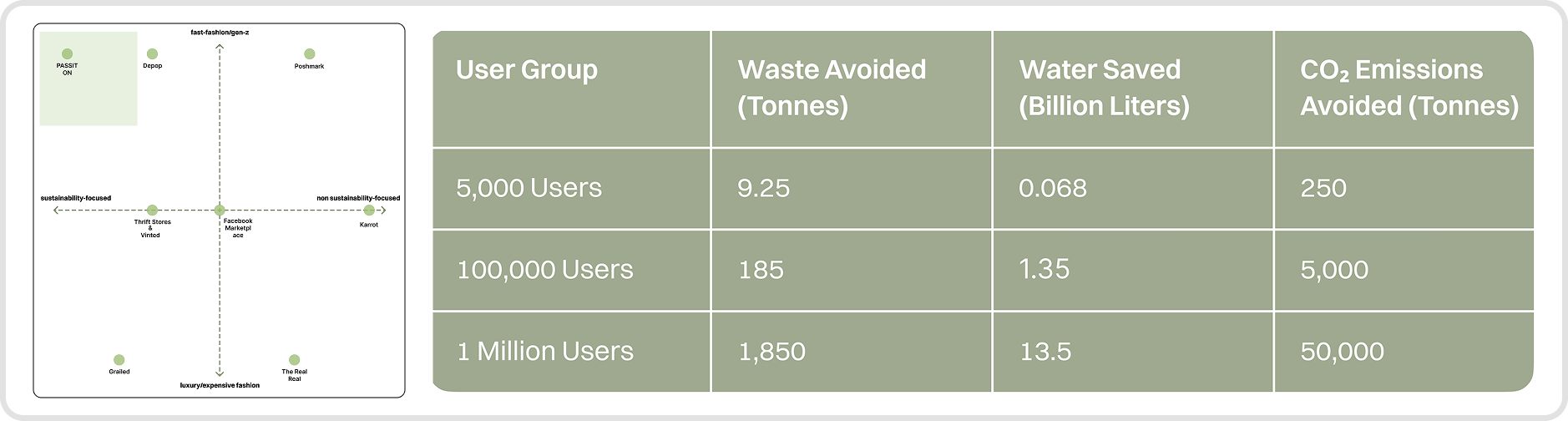
If the lifecycle of fast fashion clothing can be extended through encouraging more repeated use of each fast fashion item, the volume of textile waste arriving in Ghana can be reduced, mitigating both the environmental and health issues of the local communities.
Target User Research
Primary target consumers:
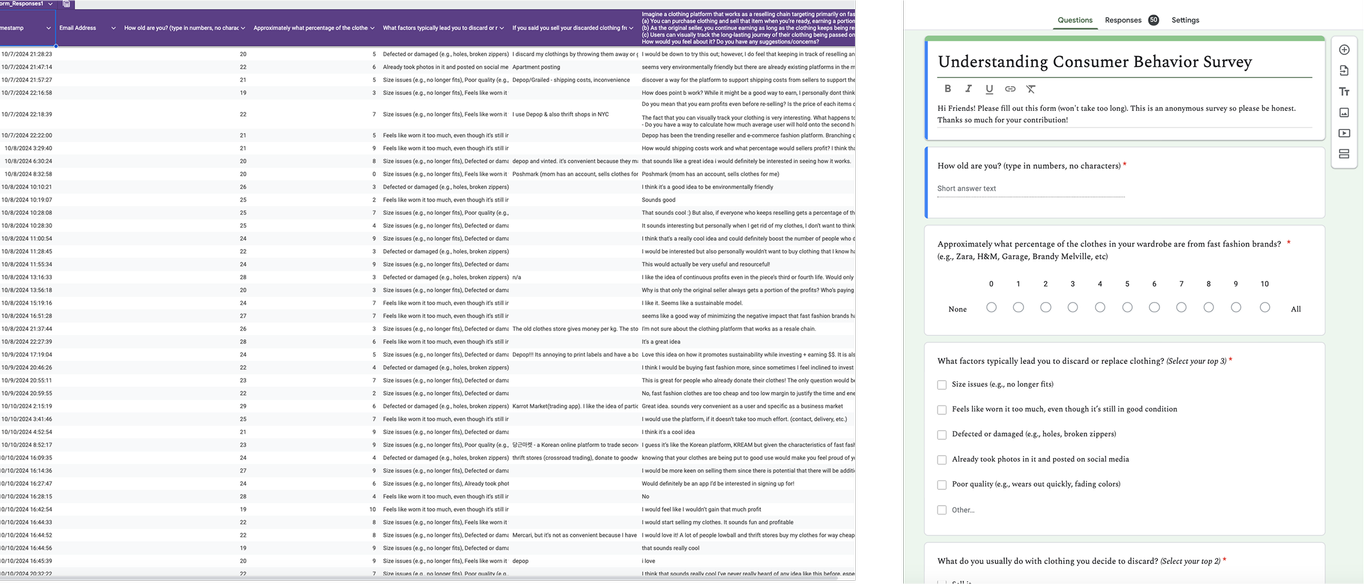
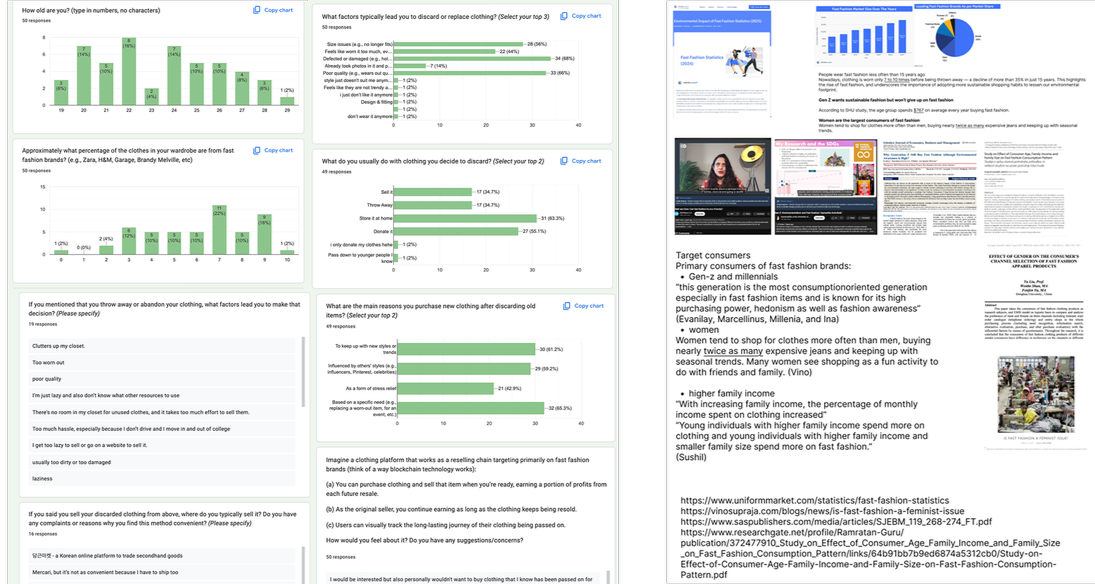
18 to 25 years old, Gen Z
Secondary target consumers:
25 to 30 years old, Gen Z and Millennials
Price Study
Pain Points
Solutions
Embrace the trends and maximize the usage of each item
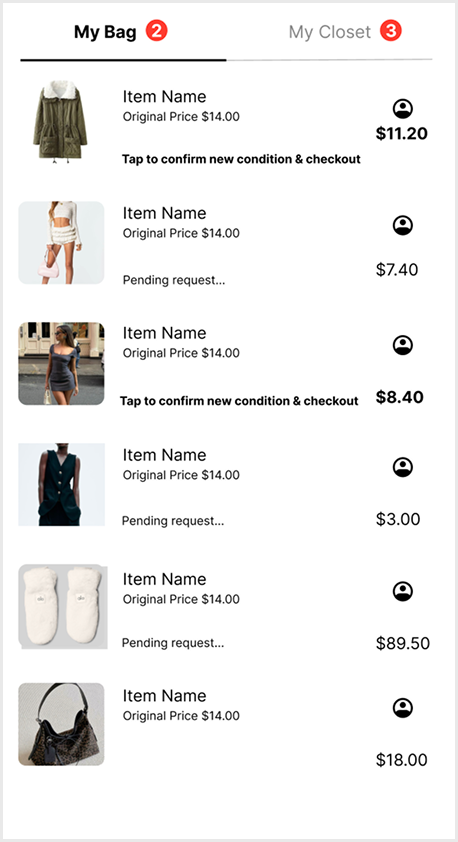
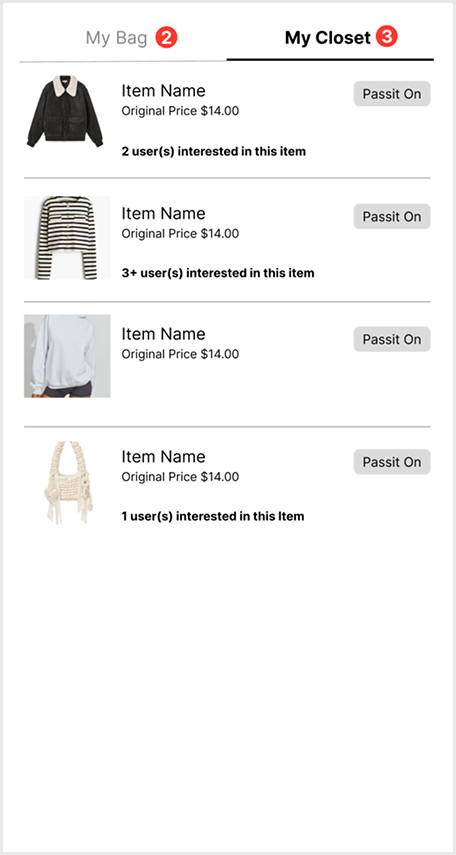
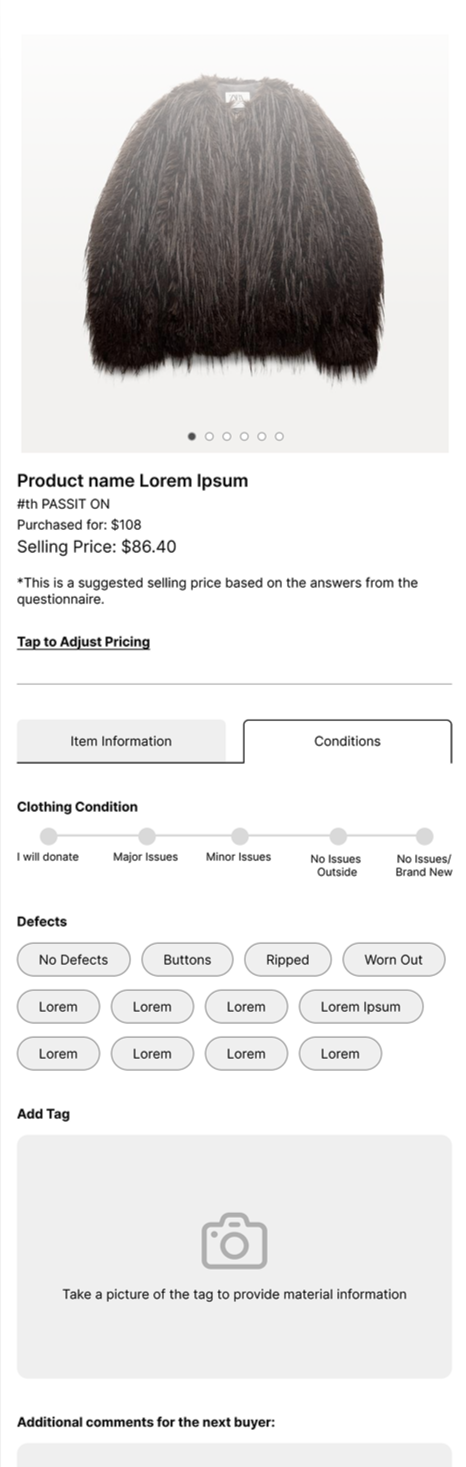
Encourage users to pass on clothes so that multiple users (e.g. 5+ users) can all be given the opportunity to wear the same item at least three times, reducing waste while enjoying trendy designs at affordable prices.
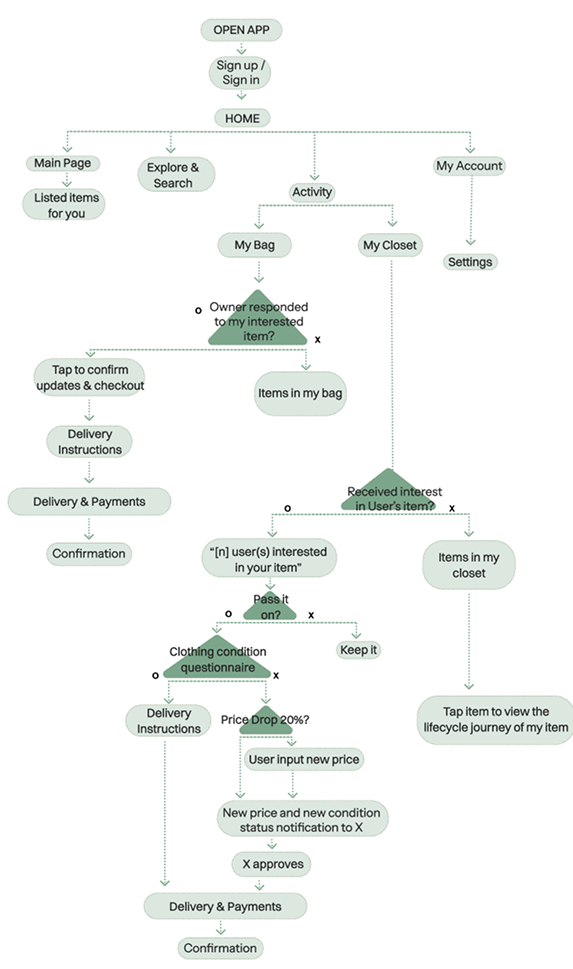
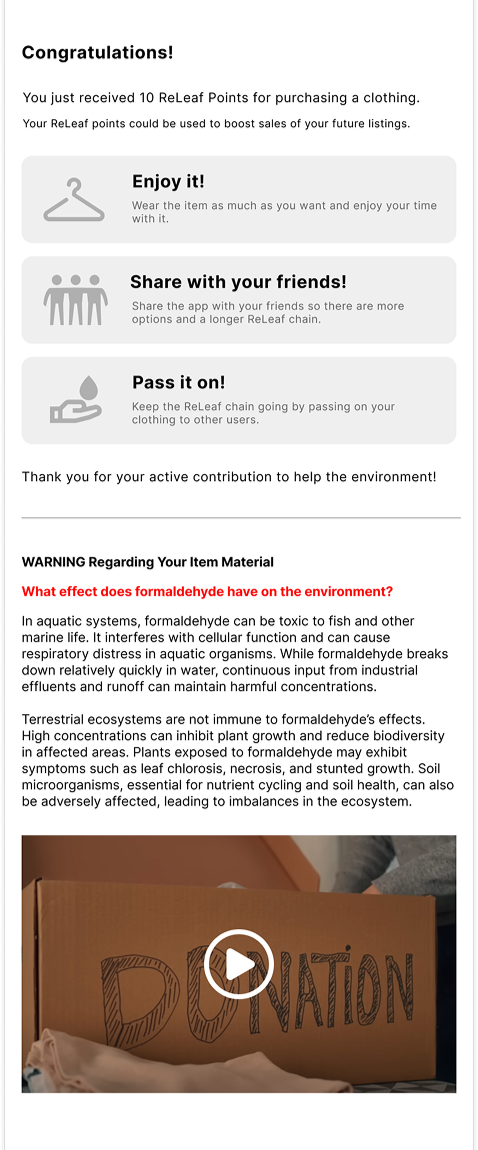
2. ReLeaf Point System and Recognition
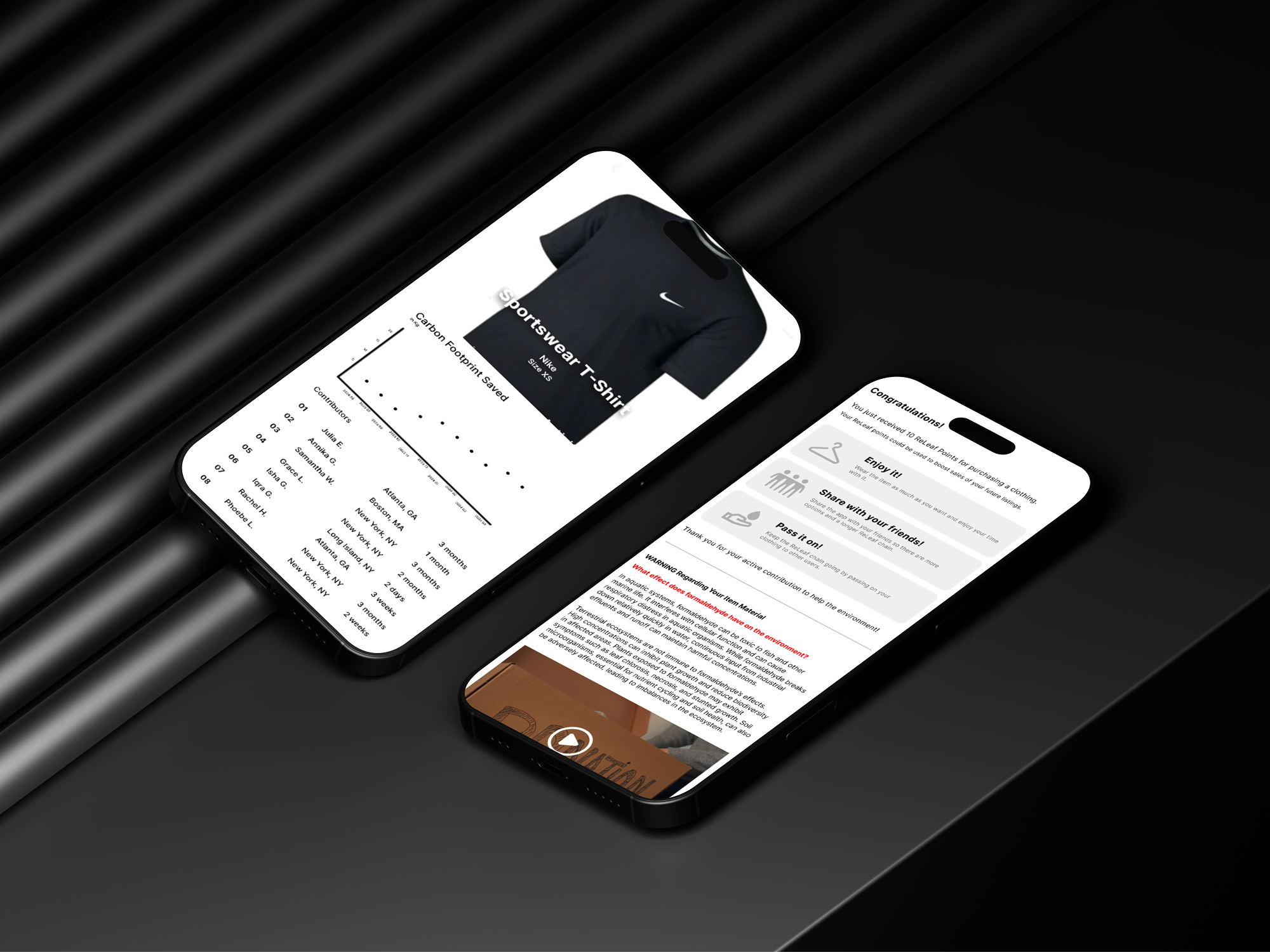
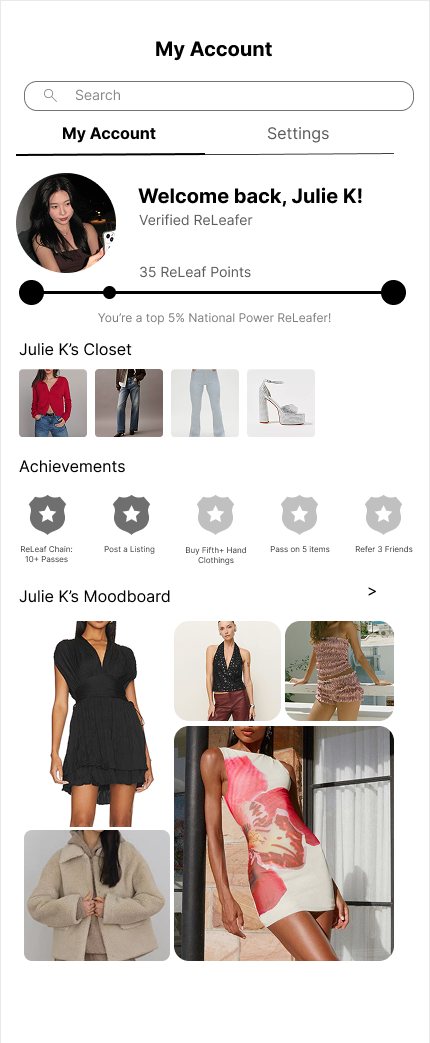
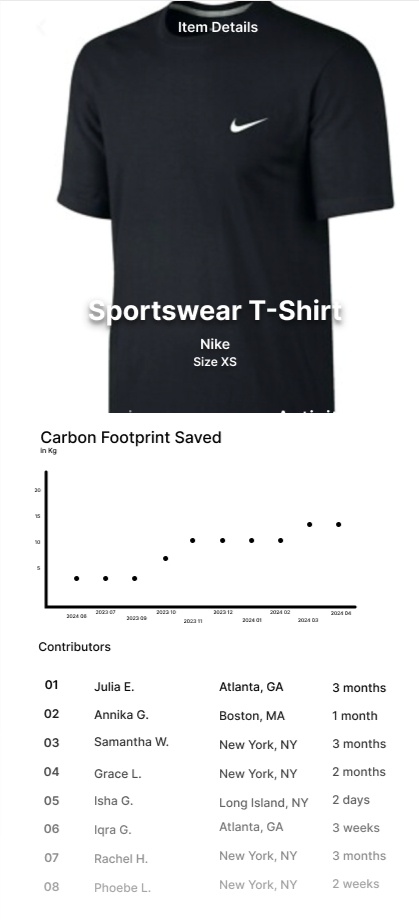
Implement ReLeaf Point System to reward active app users. Display item ownership history to build community connections and trust, while acknowledging each contributor to the circular shopping journey.
Playtesting & User Feedback
Rapidly changing fashion trends and overconsumption
Consumers get pressured to keep up with the rapidly changing fashion trends resulting in mass purchase of items from sites that offer items at affordable prices.
Cluttered closets and waste consequences
Closets are piling up with unused clothing, yet discarding these items feels irresponsible. Finding sustainable ways to part with them is often time-consuming.
Uncertainty of effectiveness
Consumers feel uncertain if their reselling or recycling have any tangible impact. This lack of visible results in losing motivation in sustainable efforts.
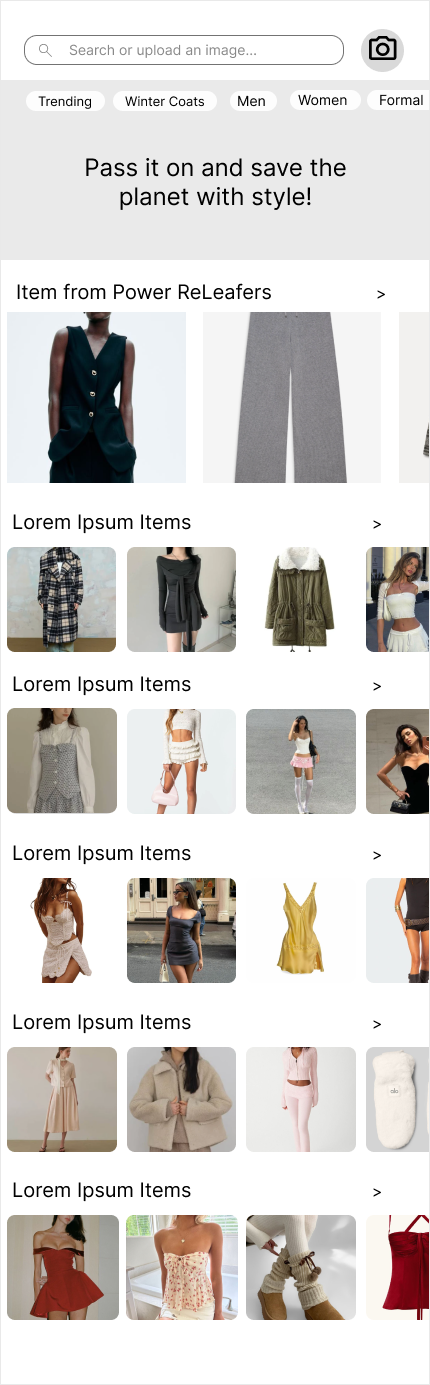
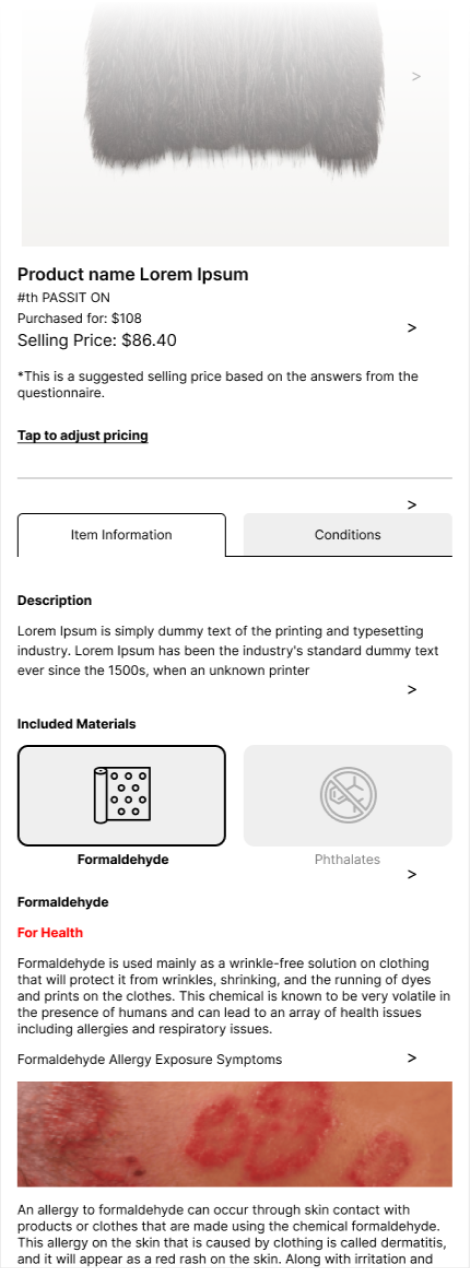
3. Material Details and Next Steps
Visually track the journey of an item, including history of previous owners. This forsers a sense of community and connection while being recognized and enhancing their reputation through promoting sustainability.

Appreciations
Ownership history tracking
Playtesters showed personal concerns in their own environmental contribution leading to lack of motivation in looking for second-hand clothing
Transparency about fast fashion’s true environmental costs to counter romanticized portrayals of fast fashion
Improvements
Enhance onboarding with storytelling
Introduce the app’s purpose and goal
Share a story of Ghana’s textile waste crisis
2. Add bundle features and free giveaways
Enable bulk listing
Simplify the process of having to sort out each item for its detail
When willing to donate, users can give them out to users in need
Key Takeaway
Though PASSIT ON can help minimize environmental costs, ongoing concerns remain about the negative impacts on our environment and health caused by consistent manufacturing and purchasing.
Designing Traceable Garment Lifecycles
Role: UI/UX Designer (Personal Project)
Timeline: May 2024 – Dec 2024
Platform: Web (Concept → High-Fidelity Prototype)
Tools: Figma, FigJam
Led research and end-to-end design of a blockchain-enabled fashion reuse app focused on extending garment lifecycle through traceability.