
Turning Casual Play into Measurable Social Impact
Role: UI/UX Designer
Timeline: May 2024 - January 2025
Platform: Web (concept → high-fidelity prototype)
Tools: Figma, FigJam
Overview
Games4Peace is a casual gaming platform designed to make philanthropy more accessible by transforming everyday play into real-world impact.
As the UI/UX Designer, I worked across research, interaction design, and visual design to shape the core experience—from onboarding and game discovery to impact tracking and profile systems.
The Problem
While many donation platforms aim to support global relief efforts, they often struggle with:
High friction to participation
Abstract or delayed impact feedback
Limited user engagement beyond one-time actions
At the same time, casual games are highly engaging but typically disconnected from meaningful outcomes. Games4Peace explores how play, motivation, and social good can coexist within a single product experience.
Competitive Analysis → Key Insights
I began by analyzing existing platforms across three categories:
Casual gaming apps
Donation and nonprofit platforms
Gamified social impact products
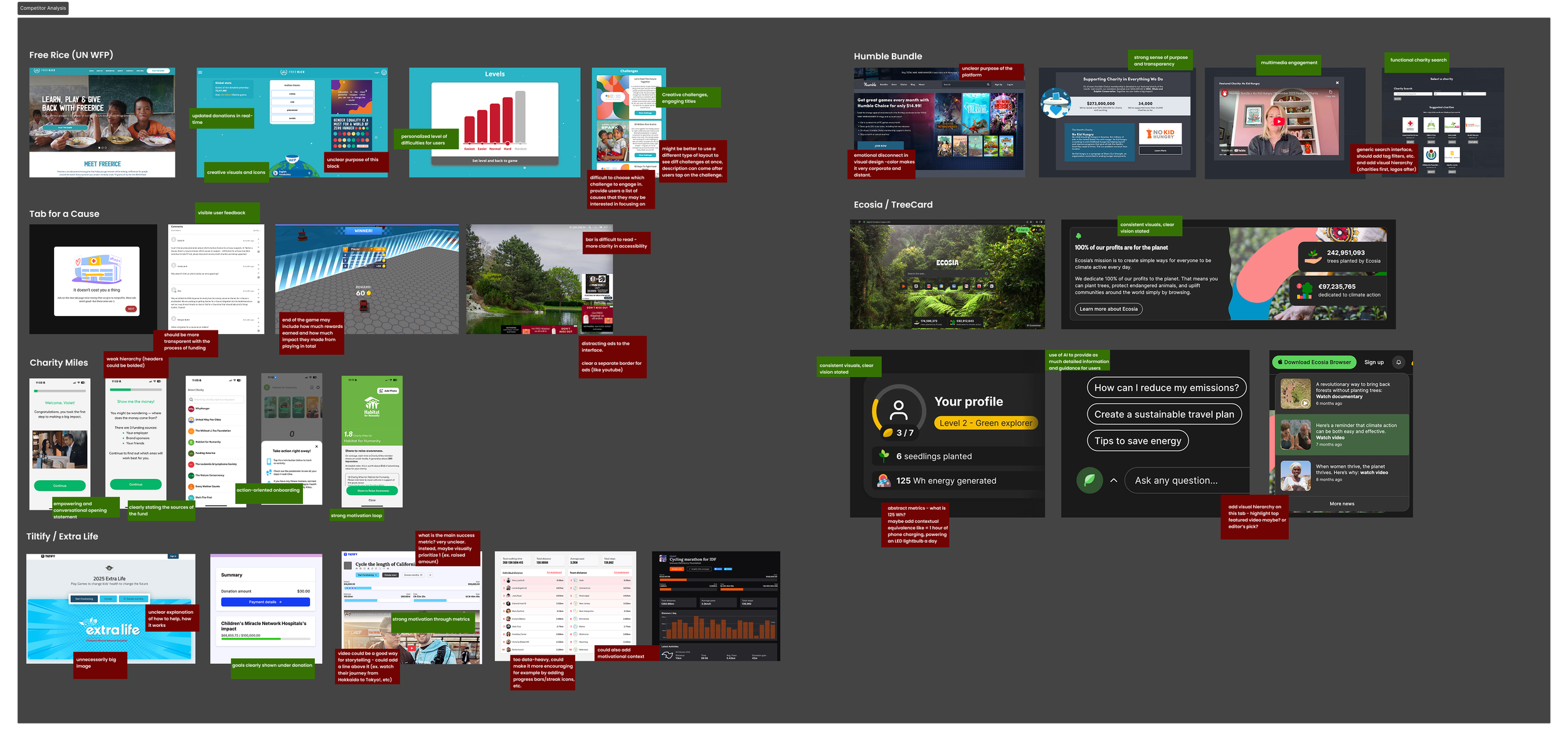
Pros and cons extracted through competitive analysis.
Through competitive and SWOT analysis, I focused on identifying patterns that consistently worked well across competitors.
Key insights extracted:
Low-friction onboarding significantly increases participation
Clear game descriptions build trust and reduce drop-off
Visible impact tracking strengthens emotional connection
Cumulative rewards encourage long-term engagement
Information Architecture & User Flow
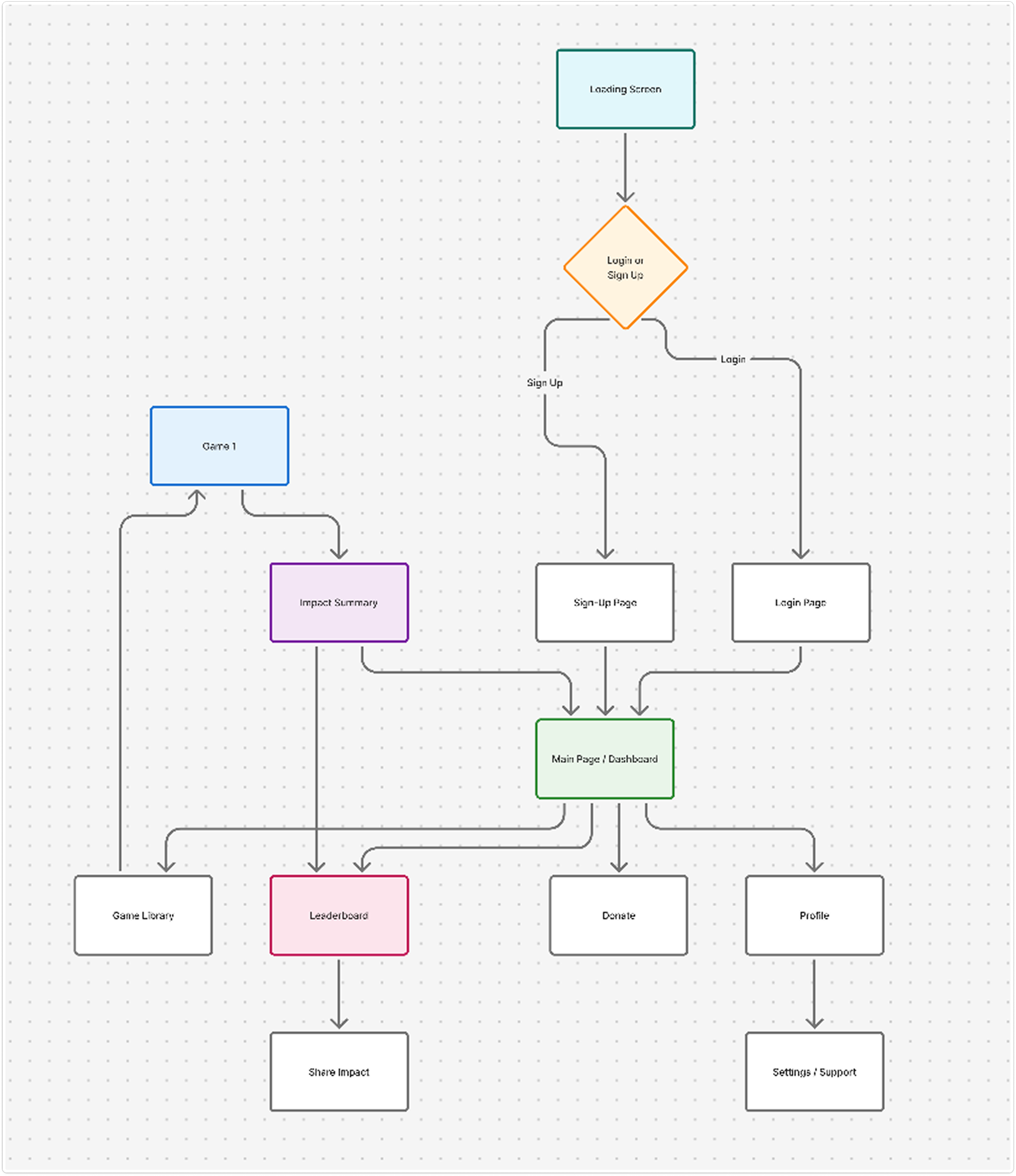
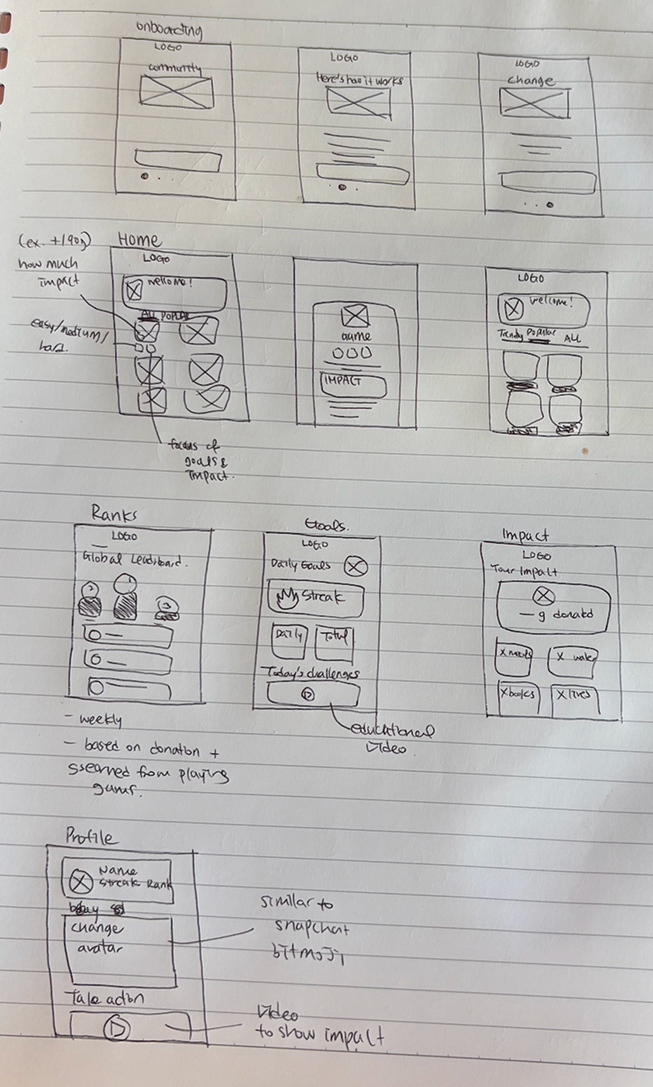
This structure ensured that impact feedback remained visible without interrupting gameplay.
Onboarding
Increasing Transparency Through Onboarding
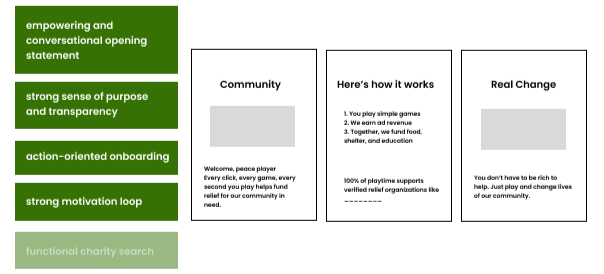
Low-fidelity onboarding screen built with key insights from competitive analysis.
Strengthening Engagement and Visualizing Measurable Impact
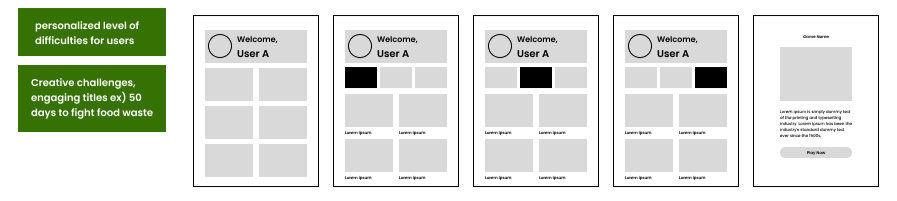
Low-fidelity home screen built with key insights from competitive analysis.
Leaderboard
Impact
Profile
Daily Progress
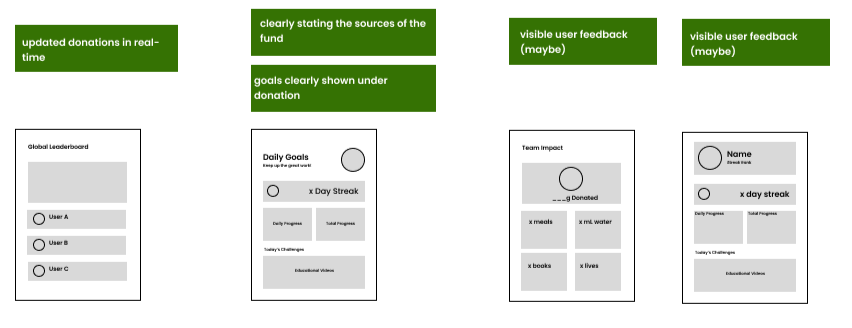
Low-fidelity Leaderboard, Daily Progress, Impact, and Profile screens built with key insights from competitive analysis.
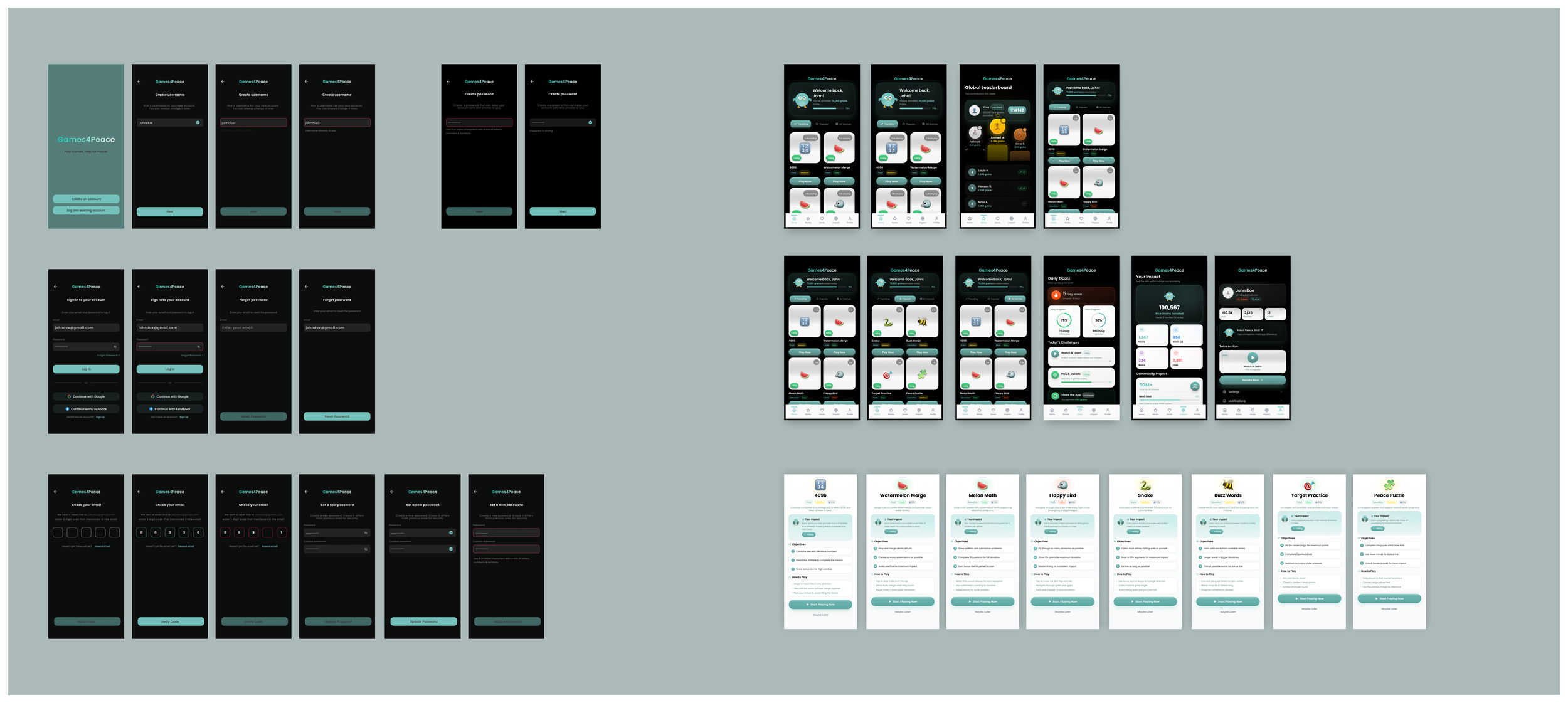
High-fidelity onboarding screen
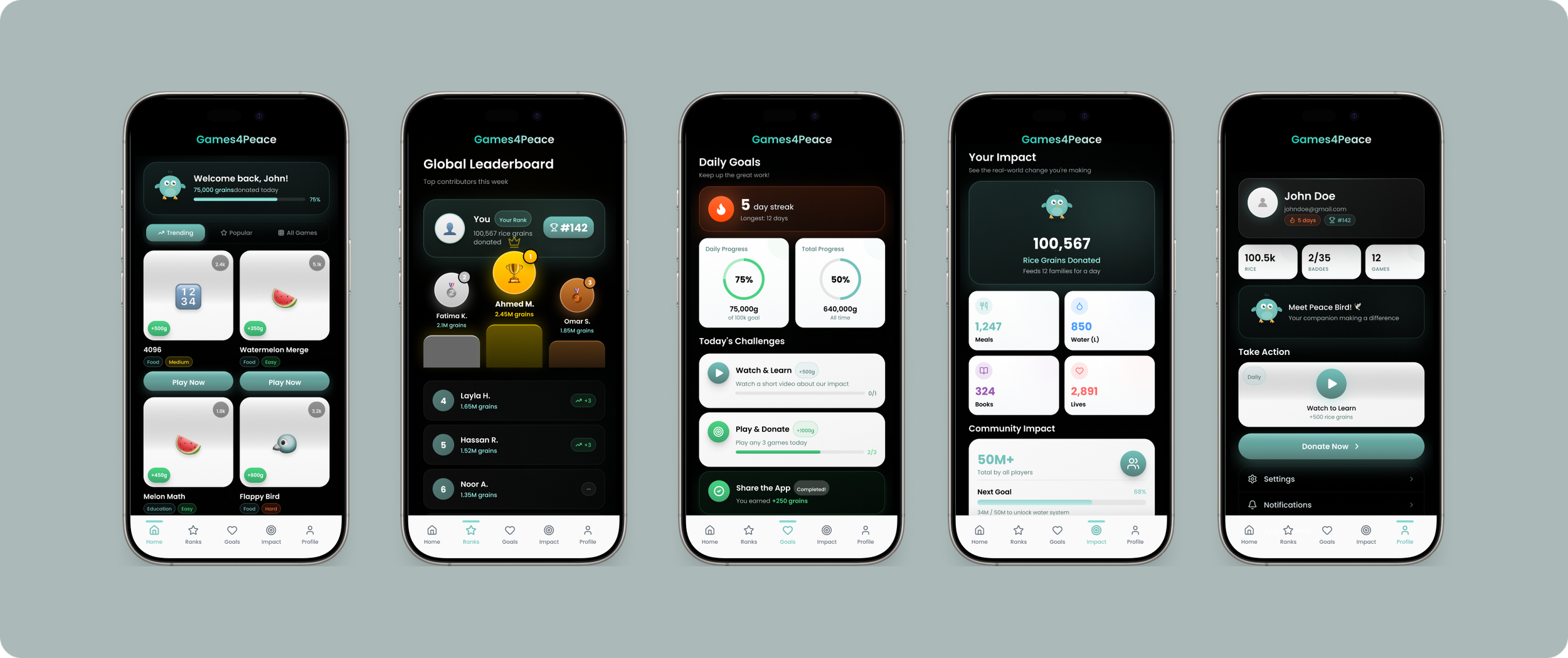
Home
High-fidelity home screen. Users can navigate through different game options and pick games to play with visible impact from playing.
Final & Reflection
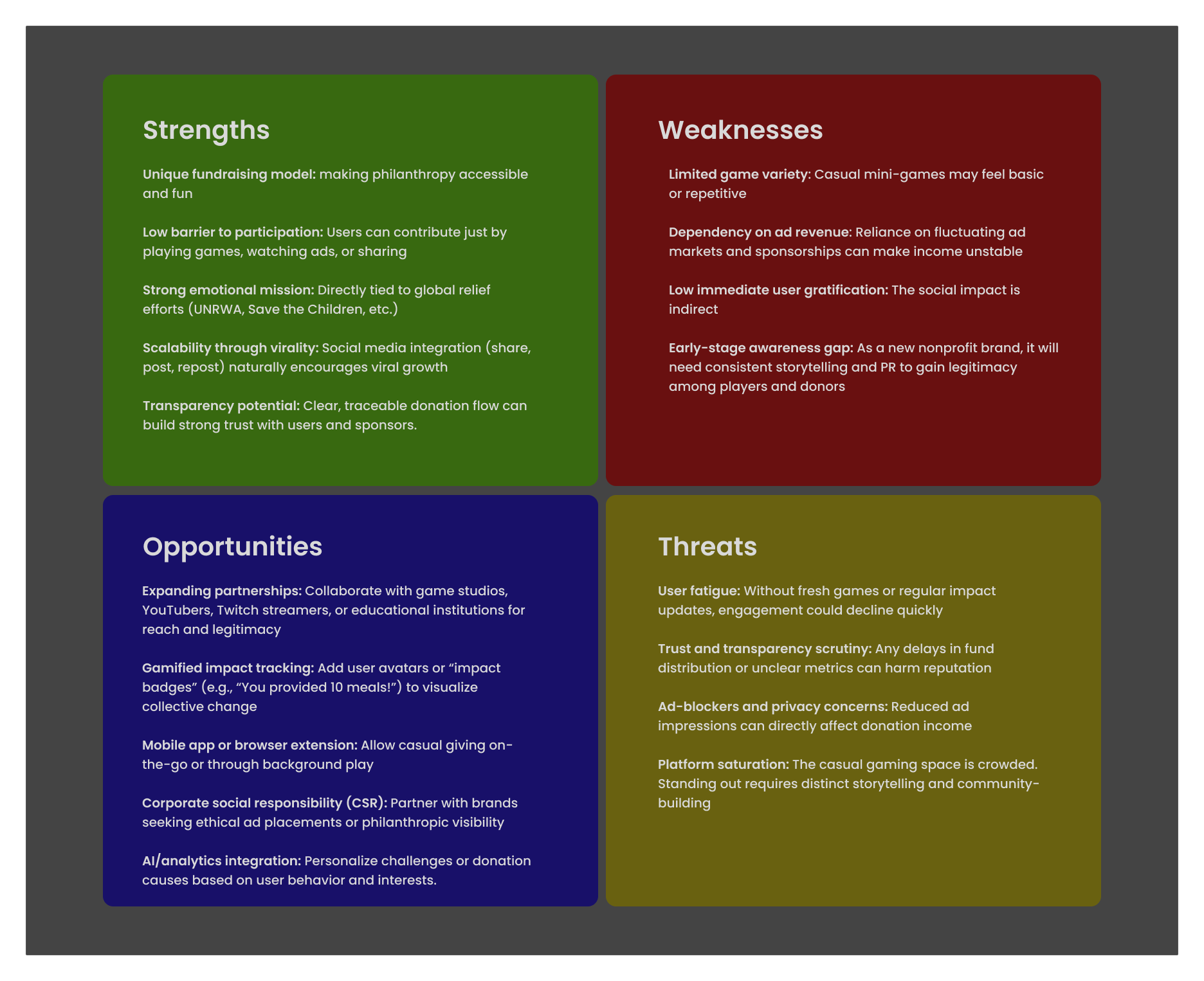
SWOT Analysis
The design focused on increasing transparency, strengthening engagement, and visualizing measurable impact, to address trust gaps and long-term user retention.